

Estimated reading time: 11 minutes
Disclaimer: Based on publicly available regulatory guidance, April 2026. Not legal or tax advice. Consult a qualified professional for your specific situation.
A £9.99/month address and a £25/month address both give you a postcode, a mail forwarding service, and a line on your incorporation record.
Virtual office addresses in London look identical at a glance.
The difference only shows up later at the KYC stage, inside a bank application, or when a client’s compliance team runs due diligence on your registered address.
Icon Offices is one of the most frequently searched virtual office providers for UK Ltd formations. It ranks for price. It appears in comparison lists. And it raises a specific set of questions that non-resident founders should have answered before they incorporate.
This post answers those questions using Companies House requirements, the Companies Act 2006, and publicly available information. No affiliate links. No verdict box. Just the regulatory picture.
What Companies House Actually Requires from a Registered Office Address
Under the Companies Act 2006, every UK limited company must maintain a registered office address that meets three criteria:
It must be a physical address in the same country as the company is registered
England and Wales, Scotland, or Northern Ireland. PO Boxes are not permitted as a registered office address, though they are permitted for a Director’s Service Address.
This distinction matters and is one of the most commonly misunderstood rules in UK company formation. A formation agent that issues you a PO Box as your registered office address is non-compliant from day one regardless of what their marketing copy says.
All official correspondence from Companies House and HMRC must be capable of being delivered there.
This is not a formality.
The registered office is where Companies House sends your confirmation statement reminder, your strike-off warning if you miss a filing, and where HMRC sends your corporation tax reference, UTR letter, and VAT correspondence if applicable.
If mail forwarding at your virtual office provider fails because the service lapses, because the provider has a processing backlog, or because you miss a renewal you will not receive statutory correspondence.
Missed statutory correspondence is not a recoverable situation in the way a missed email is. Companies House can initiate strike-off proceedings without you knowing if the address stops functioning.
The address must be publicly available on the Companies House register.
There is no opt-out for the registered office address. Anyone can search it at no cost via the Companies House public register.
Your clients search it before signing contracts. Banks search it when you apply for a business account. International clients’ legal and compliance teams search it when you submit KYC documents.
Payment processors search it when you apply for merchant accounts. The registered office address is not a private detail it is part of your company’s public identity from the moment of incorporation.
Choosing it without understanding what happens when it is searched is one of the most consequential mistakes a non-resident founder can make in the formation process.
There is a fourth practical requirement that Companies House does not state explicitly but enforces through the filing system: the address must be able to receive correspondence within a reasonable time of delivery.
A forwarding service that batches physical mail once per month and scans it three days later may technically comply with the legal requirement while failing the practical one particularly when a statutory deadline is attached to the correspondence received.
Icon Offices operates from London addresses, meaning the registered country requirement is satisfied for England and Wales registrations. The regulatory question is not the country, it is what happens downstream: under bank KYC, under client due diligence, and under the practical mail-forwarding conditions that determine whether statutory correspondence actually reaches you.
The KYC Problem That Doesn’t Appear in the Brochure
Banks and financial institutions that onboard UK limited companies are required under the Money Laundering, Terrorist Financing and Transfer of Funds (Information on the Payer) Regulations 2017 to verify the legitimacy of a company’s registered address.
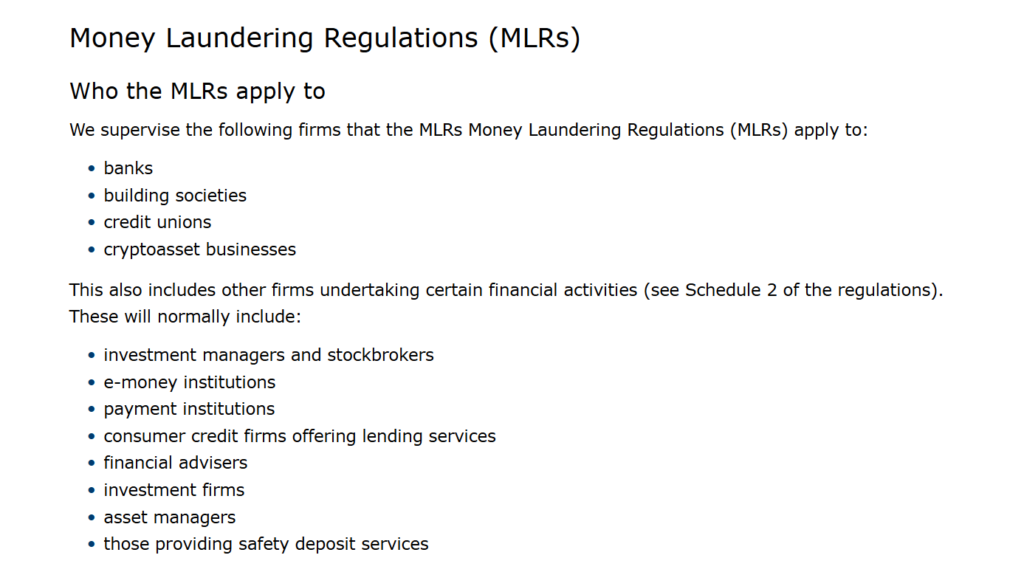
In practice, this means some banks and payment processors maintain internal lists of addresses associated with company formation mills, locations where thousands of companies are registered.
A high-density virtual office address can trigger enhanced due diligence, delay account opening, or in some cases result in an outright rejection.
This is not specific to Icon Offices. It applies to any virtual address provider operating at scale.
What matters is whether the specific address you intend to use appears on a given bank’s internal watchlist, and that information is not published.
The practical implication: if you are applying to a UK fintech bank (Wise, Tide, Revolut Business) or attempting to pass KYC with a payment processor (Stripe, PayPal Business) or an international client’s compliance team, your registered address will be checked.
A cheap virtual address that fails that check creates a problem that is expensive and time-consuming to fix after incorporation.
What Trustpilot Reviews Tell You (and What They Don’t)
Icon Offices carries reviews on Trustpilot. Positive reviews tend to focus on the onboarding experience – how quickly the address was issued, how the dashboard works, whether mail forwarding functioned correctly.
These are valid data points for operational service quality.
They are not data points for KYC performance.
A founder who successfully registered their address and received mail has had a completely different experience from a founder who subsequently failed a bank’s compliance check because of that address.
The second type of failure rarely appears in a service review, it gets attributed to the bank, not the address provider.
This is a structural blind spot in virtual office reviews across the entire category, not a criticism specific to Icon Offices.
The Service Address vs Registered Office Distinction
[IMAGE 1 — uk-ltd-registered-office-vs-service-address-diagram.webp — insert here]
Non-resident founders frequently confuse these two addresses. Companies House requires both, and they serve different legal purposes.
Registered Office: Where official statutory correspondence is delivered. Must be a physical UK address. Cannot be a PO Box. Appears publicly on the Companies House register with no opt-out.
Director’s Service Address: Where correspondence addressed to you as a director is delivered. Can be a virtual address or PO Box. Also appears publicly on the register unless you apply to suppress it — suppression is available only to directors who can demonstrate a credible risk of violence or intimidation. Companies House — Service address guidance
A non-resident founder who uses Icon Offices for their Service Address is using it for a different legal purpose than a founder using it for their Registered Office. The KYC risk profile is also different. Banks primarily scrutinise the Registered Office address during onboarding. The Service Address receives less scrutiny in most bank KYC flows.
Understanding which address you are purchasing — and what it will be used for legally — is the first question to ask any virtual office provider before signing up.
What the Price Actually Includes
Icon Offices operates on a tiered structure (Bronze, Silver, Gold, and Platinum) billed quarterly or annually.
The Bronze plan works out to approximately £3.22/month on a quarterly basis, or around £45.76 for the full year on annual prepay. Renewal pricing is at the same rate on annual plans; there is no evidence of a Year 2 price hike on the standard tiers, which puts Icon outside the renewal-creep pattern common in the virtual office category.
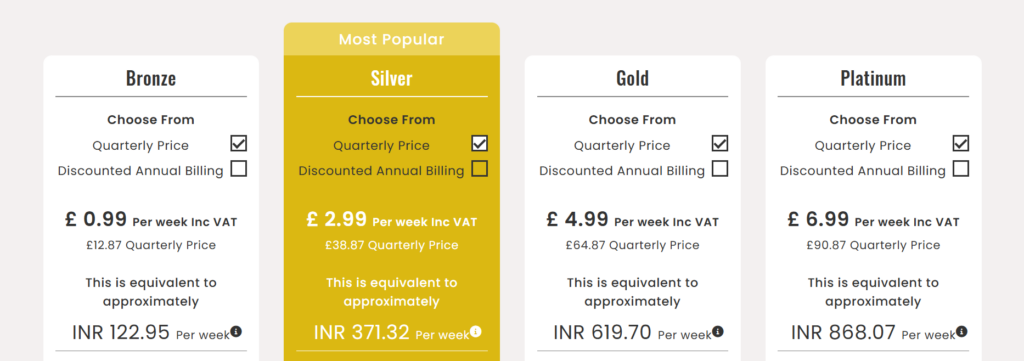
Before committing to any tier, the following variables determine whether the plan actually works for your setup:
Mail handling limits.
Bronze and Silver include up to 10 items per month. Gold extends to 20. Platinum to 30.
If your UK Ltd receives regular supplier invoices, HMRC correspondence, or client documents, the item cap matters.
Most non-resident founders running a single entity come in well under 10 items per month (but verify against your expected volume).
Mail scanning vs physical forwarding.
Scan-and-email is available.
Physical forwarding up to 100g via Royal Mail is included on qualifying tiers, but Bronze requires an upgrade to access forwarding.
For founders based in India, UAE, or Singapore, the relevant question is whether the tier you are purchasing includes forwarding, and whether international postage is covered or charged separately on items above the weight threshold.
Statutory mail handling.
Director’s Service Address and handling of HMRC and Companies House correspondence are included in the virtual office subscription, without a separately charged statutory mail tier.
This is materially different from providers that upsell statutory mail handling as a premium add-on.
Address exclusivity.
Icon issues each customer a unique suite or office number at shared physical locations. Plans cap registrations at one to three companies per tier.
This is a structurally lower KYC risk than a fully shared address where hundreds of companies carry an identical line, though it does not eliminate the risk of a bank’s internal watchlist flagging the parent address.
None of these details are visible from the headline monthly price. They require reading the full plan terms — specifically the item limits, forwarding conditions, and per-tier inclusions — before purchasing.
Prices last verified against Icon Offices pricing page: April 2026. Do not rely on this post for current pricing — verify directly at iconoffices.co.uk before purchasing.
The Practical Summary
Icon Offices is a legitimate virtual office provider operating from London.
For non-resident founders, the relevant questions are not whether it is a real company (it plainly is), but whether the specific address you intend to use will perform under bank KYC, client due diligence, and the downstream compliance checks that follow incorporation.
The only way to answer that question definitively is to speak to your intended bank before incorporating, and to verify that the address appears on their approved list, or does not appear on their exclusion list.
Next Step
If you are comparing virtual office providers for your UK Ltd formation, the full ranked comparison (including KYC track record, mail scanning quality, and Year 2 renewal costs) is in the Best Virtual Office Services in London for Non-Residents (2026) guide (Coming Soon).
For a direct comparison of UK Postbox and Icon Offices on price, features, and KYC performance, see UK Postbox vs Icon Offices (Coming Soon)
Still deciding which address to show on Companies House?
Read my guide on Director’s Service Address vs Registered Office UK (2026)
Alternatives to Icon Offices for Non‑Residents
- 1st Formations – company formation + registered office packages for non‑UK residents.
- UK Postbox – standalone virtual address and mail scanning.
- Quality Company Formations – if you want a formation agent plus address services.
FAQ
Can I use Icon Offices as my registered office address for a UK Ltd?
Yes — Icon Offices provides physical London addresses that satisfy the Companies Act 2006 requirement for a registered office in England and Wales. A registered office must be a physical address capable of receiving statutory mail; Icon’s addresses meet that standard. The downstream question — whether that specific address performs well under bank KYC and client due diligence — is separate from the legal compliance question.
Is Icon Offices on Companies House’s approved address list?
Companies House does not publish an approved list of virtual office providers. Any physical UK address can be used as a registered office, provided it can receive statutory mail. The approved-list concept applies to banks and payment processors, not Companies House itself — and those lists are internal, unpublished, and vary by institution.
Will a bank reject my application because I used a virtual office address?
Not automatically. Banks conducting KYC on UK companies check registered addresses as part of their anti-money laundering obligations under the 2017 MLR regulations. High-density virtual addresses — where thousands of companies share one line — carry higher rejection risk. Icon mitigates this by issuing unique suite numbers with a cap of one to three companies per tier, which reduces (but does not eliminate) the risk of the parent address being flagged by a specific bank’s internal watchlist.
What is the difference between a registered office and a director’s service address, and which one do I actually need?
You need both. The registered office is where statutory correspondence from Companies House and HMRC is delivered — it must be a physical address, cannot be a PO Box, and is permanently public on the register. The director’s service address is where correspondence addressed to you personally as a director is delivered — it can be a virtual address or PO Box, and also appears publicly unless suppressed. Icon Offices can serve either purpose; confirm which address type you are purchasing before signing up.
What happens if my virtual office provider stops forwarding my mail?
If statutory mail from Companies House stops reaching you — because a forwarding service lapses, a subscription expires, or there is a processing failure — you will not receive filing reminders, strike-off warnings, or HMRC correspondence. Companies House can initiate strike-off proceedings without your knowledge if the address stops functioning as a live delivery point. This is the practical risk of any virtual office arrangement, not a risk specific to Icon. Setting calendar reminders for all statutory deadlines independently of mail receipt is the minimum mitigation.
Does Icon Offices include handling of HMRC and Companies House letters in the base subscription?
Yes — director’s service address and handling of statutory correspondence from HMRC and Companies House are included in the virtual office subscription without a separate charge. This differs from providers that tier statutory mail handling as a premium add-on. Confirm the current terms directly with Icon before purchasing, as inclusions can change between plan versions.
How many items of mail can I receive per month on the Bronze plan?
The Bronze and Silver tiers include up to 10 items per month. Gold extends to 20 items, Platinum to 30. Most non-resident founders running a single UK Ltd come in well under 10 statutory items per month — but if your company receives regular supplier invoices, client documents, or bank correspondence by post, audit your expected monthly volume against the cap before choosing a tier.
If I incorporate with Icon Offices and need to change my registered office later, how hard is it?
Changing a registered office requires filing a form AD01 with Companies House. The new address must be in the same country of registration (England and Wales if you incorporated there). The change takes effect when Companies House processes the filing — typically within 24 hours for online submissions. There is no penalty for changing address, but you must notify any banks, payment processors, and clients holding your registered office on file. The practical cost is administrative, not financial.